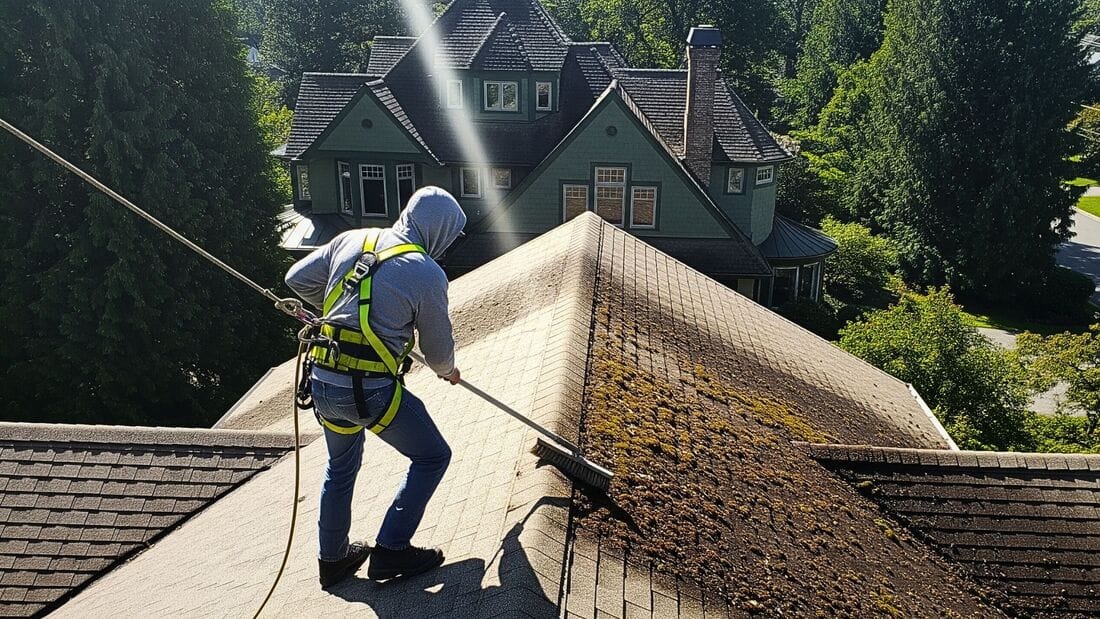
A green tint on your roof might look quaint from the curb, evoking the charm of an old-world cottage, but roofing contractors see something entirely different: an active biological hazard. Moss is not merely an aesthetic issue or a harmless layer of surface vegetation. It is an aggressive, moisture-trapping organism that slowly dismantles roofing systems from the outside in.
Left unchecked, a light dusting of green cushions turns into thick, sponge-like mats that pry shingles apart, rot wooden decking, and shave years off the lifespan of an asphalt roof. Understanding how moss behaves, how to remove it safely without compounding the damage, and how to prevent its return is essential for protecting both your home and your wallet.
The Hidden Threat: How Moss Destroys Shingle Integrity
To appreciate why moss is so dangerous to a roof, you have to understand how asphalt shingles are engineered. Shingles are layered like scales on a fish, designed to shed water downward via gravity. Their surface is coated with ceramic granules that reflect ultraviolet radiation, shield the underlying asphalt from solar degradation, and provide fire resistance.
Unlike common algae, which creates dark, soot-like stains across a roof but generally remains superficial, moss is a non-vascular plant. It possesses fibrous anchor structures called rhizoids. These tiny filaments work their way directly into the small crevices between the protective mineral granules. As the moss grows, these anchors expand, dislodging the granules and exposing the raw, fragile asphalt core beneath to direct sunlight and weather.
The physical presence of moss creates an even bigger problem through water retention. A healthy patch of moss can absorb several times its weight in water. When it sits on your roof, it holds continuous moisture against shingles that are meant to dry out between rainstorms.
Over time, this trapped moisture creates three severe failure points:
-
Prying and lifting: As moss clusters expand at the shingle edges, they wedge themselves under the tabs, breaking the manufacturer seal strip and lifting the shingles upward. This breaks the overlapping drainage plane and allows wind-driven rain to blow underneath.
-
Capillary action: Trapped moisture does not simply sit still; it is drawn upward against the slope of the roof through capillary action, saturating the underlayment and soaking the plywood or OSB roof decking.
-
The freeze-thaw cycle: In colder months, the water saturated inside the moss expands as it freezes. This expansion exerts mechanical pressure right along the shingle edges, cracking brittle asphalt, loosening fasteners, and accelerating structural decay.
What Never to Do: Costly Mistakes That Ruin Roofs
When homeowners realize their roof is covered in moss, their first instinct is often aggressive action. Unfortunately, hurried or poorly chosen cleaning methods often cause far more damage than the moss itself.
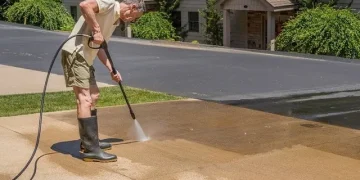
The most catastrophic mistake is using a pressure washer. A blast of pressurized water can strip decades worth of protective granules off asphalt shingles in a matter of seconds. Once those granules are stripped away, the asphalt substrate is exposed to UV breakdown, turning brittle and failing long before its expected lifespan. Furthermore, high-pressure spray directed at an upward or horizontal angle forces water backward under the shingle laps, soaking the attic insulation and drywall below.
Another common blunder is taking an abrasive wire brush or a stiff metal scraper to the roof. Scrubbing against the granules gouges deep furrows into the shingle surface, leaving permanent scars and voiding the manufacturer warranty.
Chemical missteps are equally damaging. Dousing the roof in straight, concentrated chlorine bleach can dry out asphalt binders, corrode metal flashing, rust gutter fasteners, and kill surrounding foundation plants when the runoff drips from the eaves. Cleaning a roof requires patience, gentle mechanical force, and the right chemistry, not brute force.
A Step-by-Step Guide to Safe and Effective Removal
Removing moss safely requires a dry, overcast day. Overcast skies are ideal because direct sunlight dries out liquid cleaning treatments before they have time to penetrate the thick moss mats.
Pre-Treatment Preparation and Safety
Working on a roof is inherently hazardous, and moss makes the surface dangerously slick. Before stepping onto a ladder, make sure you have the proper safety gear. Wear slip-resistant, soft-soled work shoes, use a ladder standoff stabilizer to avoid crushing your gutters, and secure yourself with an OSHA-compliant fall protection harness if your roof pitch is steep.
Before applying any treatments, protect your landscaping. Thoroughly soak the shrubs, flowerbeds, and lawn directly beneath the roofline with fresh water from a garden hose. Saturating plant leaves and soil ensures that any chemical runoff will be diluted rather than absorbed directly by the roots. Cover delicate ornamental plants with plastic sheeting or canvas drop cloths for an extra layer of protection.
Clean out your gutters and downspouts completely. Blocked gutters will hold the heavy runoff and dislodged moss clumps, creating blockages and overflowing onto walkways.
Gentle Manual Brushing
The goal of manual brushing is to remove the loose, bulky portions of the moss without disturbing the shingle granules.
Using a soft-to-medium-bristle brush attached to an extendable pole, begin brushing the roof surface. Always brush in a downward direction, following the slope of the roof. Brushing upward catches the edges of the shingles, bends them backward, and breaks the adhesive seals.
Do not attempt to scrape away every single strand of moss down to the bare asphalt. The deepest rhizoids are woven into the granules; pulling them out by force while the moss is alive will take the granules with them. Instead, brush away the top two-thirds of the growth—the fluffy, spongy upper layer—and leave the stubborn base for the chemical treatment to dissolve naturally.
Applying the Right Cleaning Solution
Once the bulk material is cleared away, apply a dedicated cleaner to kill the remaining moss roots and spores. There are two primary solutions that work effectively without destroying roofing materials:
-
Oxygen bleach (sodium percarbonate): Unlike chlorine bleach, oxygen bleach is environmentally benign, breaking down into water, oxygen, and soda ash. It does not strip color from shingles, will not corrode metal fasteners, and is safe for surrounding vegetation. Mix the powder with warm water in a standard pump sprayer and apply it liberally across the affected areas.
-
Specialized roof washes containing zinc sulfate or alkyl dimethyl benzyl ammonium chloride: These commercial formulas are designed specifically for moss and lichen control. They work slowly by breaking down the cellular structure of the plant over several days to weeks.
Spray the solution evenly over the moss-covered areas, starting from the ridge and working down toward the eaves. Allow the product to soak into the moss according to the product directions, typically between twenty to forty-five minutes. Do not let the roof dry out completely during this period; if necessary, mist the surface lightly to keep it damp.
Once the dwell time is complete, rinse the roof thoroughly using a garden hose equipped with a standard spray nozzle. Again, spray strictly downward from the top of the slope to mimic rainfall. Over the following two to three weeks, any remaining moss roots will turn brown, dry out, and release their grip, washing away naturally with seasonal rain.
Long-Term Prevention: Keeping Moss from Coming Back
Killing an active infestation solves the immediate problem, but if your roof provides the right environmental conditions, moss will return within a couple of seasons. Long-term defense relies on modifying the microclimate of your roof and introducing preventative barriers.
Install Metal Inhibitor Strips
One of the most permanent, low-maintenance ways to prevent moss growth is installing zinc or copper strips directly below the ridge cap along the peak of the roof.
When rain falls on these metallic strips, microscopic metal ions leach into the water. As this ion-rich water washes down the slope of the roof, it creates an environment where moss, lichen, and algae spores cannot survive or take root. Copper tends to be slightly more effective and lasts longer than zinc, though zinc is widely popular due to its lower cost and silver tone, which blends naturally with gray and black shingles.
Ensure that at least two to three inches of the metal strip remains exposed to rainwater. For homes with particularly long roof slopes, installing an additional row of strips halfway down the roofline ensures consistent coverage all the way to the gutters.
Increase Sunlight and Air Circulation
Moss thrives in damp, cool, shaded environments. If towering trees hang over your roof, they create an ideal incubator by blocking sunlight and dropping organic debris that decomposes into a nutrient layer.
Prune back tree branches so that the canopy remains at least ten feet away from the roofline. This step accomplishes three vital things: it allows sunlight to bake the roof dry after storms, promotes continuous airflow across the shingles, and drastically reduces the volume of fallen leaves and twigs trapped in roof valleys.
Keep Roof Valleys and Gutters Clear
Pockets of decomposing leaves and pine needles hold moisture and create the rich organic bed that moss needs to germinate. Make it a habit to clean out valleys, skylight saddles, and gutter lines at least twice a year, typically in late spring and late autumn. Using a leaf blower from a safe position or sweeping with a soft broom keeps these debris traps completely clean before damp weather sets in.
Deciding Between DIY and Professional Remediation
While modest patches of moss can be managed by an experienced homeowner with basic tools, severe infestations often warrant professional intervention.
If your roof pitch is steep, your home is more than two stories tall, or moss has begun lifting significant portions of shingles across large sections, climbing onto the roof presents severe safety hazards. Professional roof cleaning services use specialized low-pressure chemical delivery systems, often referred to as soft washing, paired with safety gear designed to navigate steep pitches without causing granule wear.
Furthermore, if the moss has already compromised the shingle structure, a qualified roofing specialist can spot underlying decking rot and seal failures that a simple cleaning cannot fix. Addressing moss early protects the structural integrity of your home, keeps your shingles intact, and ensures your roof continues doing its primary job: keeping the elements outside where they belong.