Pressing a glass against the refrigerator dispenser and hearing a strained hum without a single cube dropping into the tumbler is a classic household frustration. Ice makers are deceptively intricate appliances. Operating inside a sub-zero environment, they rely on a delicate synchronization of electrical switches, heating elements, water valves, and mechanical gears. When one part of that cycle stumbles, moisture accumulates where it should not, and solid ice binds the moving parts.
Faced with a frozen assembly, many homeowners make the costly mistake of grabbing a butter knife, screwdriver, or ice pick to chip away at the glacier. Doing so almost always ends in heartbreak, whether by scratching the non-stick coating of the mold tray, cracking plastic drive gears, or puncturing a concealed evaporator line and turning a minor inconvenience into an expensive appliance replacement. Safely restoring your ice maker requires patience, the right approach, and an understanding of why the system froze up in the first place.
Identifying the Exact Location of the Freeze
Before attempting any fix, you need to pinpoint where the ice has formed. Ice makers rarely freeze over as a uniform block. Instead, clogs typically concentrate in one of four distinct zones, each pointing to a different mechanical or environmental breakdown.
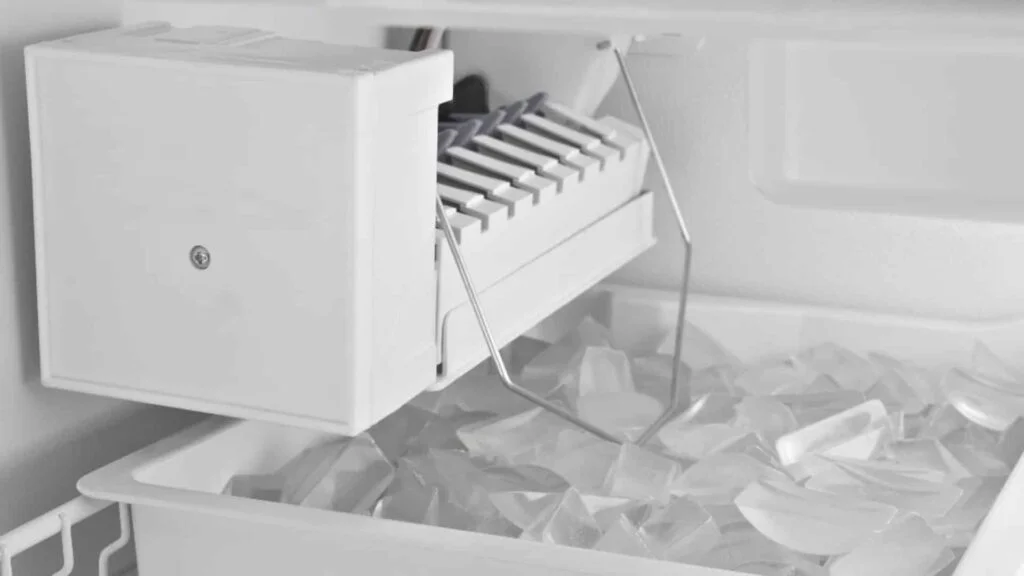
The most common site is the ice mold tray and ejector blades. In standard crescent-cube assemblies, a motorized rake rotates through the mold cavities to push newly frozen cubes into the storage bucket. If a batch fails to release cleanly, half-ejected cubes can fuse to the rake teeth, creating a stubborn mechanical obstruction that stalls the motor.
The second trouble spot is the water fill tube. This is the small plastic or silicone spout that extends from the back of the freezer compartment directly over the ice mold. If water freezes inside this tube, incoming water cannot reach the tray. The supply backs up, spills over surrounding components, and encases the entire rear bracket in an icy shell.
The third area is the ice storage bin and auger assembly. When ice sits unused for weeks, the cubes undergo sublimation and surface melting, gradually fusing into a massive block. When the dispenser motor attempts to rotate the metal auger screw through this solid mass, the drive collar binds or strips completely.
Finally, check the dispenser chute flap. Located in the freezer door, this spring-loaded damper door opens to let ice drop into your glass and seals shut to keep room air out. If a stray ice fragment wedges the door open even a fraction of an inch, warm, humid kitchen air enters the chute. That moisture condenses, refreezes, and forms a thick frost collar around the dispenser opening.
Safe, Step-by-Step Methods to Clear the Jam
Once you locate the blockage, turn off the ice maker before touching any components. Depending on the model, this means flipping the wire shutoff arm up into the locked position, toggling the power switch on the housing, or turning off the ice function on the exterior digital control panel. Disconnecting power protects the delicate timing motor from burning out while you work.
The Warm Water and Baster Technique
For localized ice dams around the ejector blades or fill spout, gentle thermal transfer using warm water is by far the safest approach. It eliminates the risk of warping temperature-sensitive plastics or scratching non-stick coatings.
Fill a turkey baster or large plastic squeeze bulb with warm tap water. Avoid boiling water, as the sudden thermal shock can warp the plastic housing or cause micro-fractures in ceramic and aluminum mold coatings. Position a shallow container or dry towel directly underneath the ice maker to catch drips.
Direct a steady stream of warm water onto the frozen junctions holding the ejector fingers or blocking the ice mold. Work slowly around the perimeter of the trapped cubes. As the ice softens, use your fingers or a silicone kitchen spatula to dislodge the loosened chunks. Never pry against the metal rake arm with excessive leverage; if the ice resists, apply another round of warm water until it releases naturally.
The Controlled Hair Dryer Method
If you are dealing with broad frost buildup or a frozen fill tube nestled deep inside the housing, a standard hair dryer can clear the blockage quickly. However, this tool demands strict discipline. The interior liner of a modern refrigerator is made of thin polystyrene, which softens and warps at surprisingly low temperatures.
Set the hair dryer to low or medium heat. Never use the high heat setting, and keep the nozzle at least eight to ten inches away from all plastic surfaces. Sweep the nozzle continuously across the frozen area rather than holding it in a fixed spot.
As the ice turns slushy, wipe away the moisture with clean microfiber towels so water does not drip into the electrical harness behind the module or refreeze along the bottom shelf. Once the bulk of the ice releases, dry all accessible surfaces thoroughly before restoring power.
Removing and Thawing the Storage Bin
When the auger inside the storage bin is locked in solid ice, removing the bucket entirely is far easier than trying to clear it inside the freezer.
Gently lift and pull the ice container forward along its guide tracks. If the bin feels glued to the shelf, do not yank on the handle, which can easily snap the front plastic trim. Instead, use a hair dryer on low heat aimed at the bottom mounting rails and rear drive coupling for two to three minutes to break the frost seal.
Carry the bin to the kitchen sink and let it sit at room temperature for fifteen to twenty minutes. Dump the solid ice block into the sink. Wash the interior of the bin with lukewarm water and mild dish soap to remove stale odors and mineral scale. Inspect the plastic rotating blades and the metal auger rod for cracks or bends. Most importantly, allow the bin to dry completely before sliding it back into the freezer. Placing a damp bin back into a sub-zero environment immediately creates a new layer of frost that will bind the auger drive.
Resolving a Frozen Fill Tube at the Source
If the fill tube above the ice mold continues to freeze into a solid icicle, clearing the ice is only a temporary fix. You must address the underlying cause of the freeze-up.
A fill tube typically freezes when the water inlet valve at the back of the refrigerator fails to seal tightly. This dual-solenoid valve controls water delivery to both the door dispenser and the ice maker. When the valve wears out or collects sediment, it can weep a tiny droplet of water every few seconds. In a zero-degree freezer, that slow drip does not have enough volume or velocity to clear the spout; it simply freezes in place, layer by layer, until the tube is choked solid.
Another frequent cause is low household water pressure. Refrigerator water valves rely on adequate mechanical water pressure, typically a minimum of twenty to thirty pounds per square inch, to snap shut cleanly after a fill cycle. If your home has low water pressure, a partially closed saddle valve, or a heavily clogged water filter, the valve closes sluggishly. That delay leaves residual water sitting right at the tip of the freezer spout, where it rapidly freezes.
To fix this, check your refrigerator water filter. If it has been in service for more than six months, replace it immediately to restore proper flow rate. If the tube freezes again despite good pressure and a fresh filter, inspect the water inlet valve behind the rear access panel of the refrigerator and replace the solenoid assembly.
Checking Temperature and Airflow Dynamics
An ice maker depends on stable, circulating cold air to run its harvest cycles properly. If the ambient conditions inside the freezer wander outside manufacturer specifications, mechanical jams become inevitable.
Use an independent appliance thermometer to verify your freezer temperature. The optimal setting for ice production is between 0°F and 5°F. If the freezer runs too warm, above 10°F to 12°F, the internal thermostat on the ice maker will not trigger the harvest cycle on time. Cubes may melt slightly during automatic defrost cycles, merge with neighboring pockets of water, and freeze into an irregular cluster that jams the rake.
Conversely, setting the freezer down to negative ten degrees does not make ice faster. Extreme cold causes water entering the mold to freeze on contact before leveling out across the individual cube wells. This creates jagged ridges and hollow centers that shatter when the ejector fingers engage, scattering hard shards into the gear housing.
Ensure that frozen food packages are not stacked tightly against the ice maker housing or the rear air vents. Blocked vents disrupt the laminar airflow that sweeps moisture out of the compartment, creating humid dead zones where frost collects rapidly.
Maintenance Habits to Prevent Future Jams
A few regular habits will keep your ice maker running smoothly and help you avoid future freeze-ups.
First, practice active ice rotation. If you live in a small household or rarely use ice during winter months, the cubes in the bin will inevitably fuse together from normal defrost cycles. Dump the bin into the sink once every three to four weeks, or turn the ice maker off entirely if you do not plan to use it for an extended period. Stirring the bin with a clean wooden spoon once a week also keeps individual cubes separated and prevents bridging over the auger funnel.
Inspect the door perimeter and dispenser flap periodically for air leaks. Close a dollar bill in the freezer door gasket; if the bill pulls out easily with no resistance, the seal is loose, allowing warm air to enter and fuel frost accumulation. On the dispenser door, look up into the chute from the outside with a flashlight. If you see light shining around the edges of the flapper seal, the spring or seal gasket needs adjustment to keep humid kitchen air from migrating upward.
Taking time to address the root thermal and mechanical causes of an ice jam protects your appliance from recurring failures. Gentle thawing techniques, proper filter maintenance, and stable operating temperatures ensure that whenever you reach for a cold beverage, the system delivers clear, clean ice without a hitch.